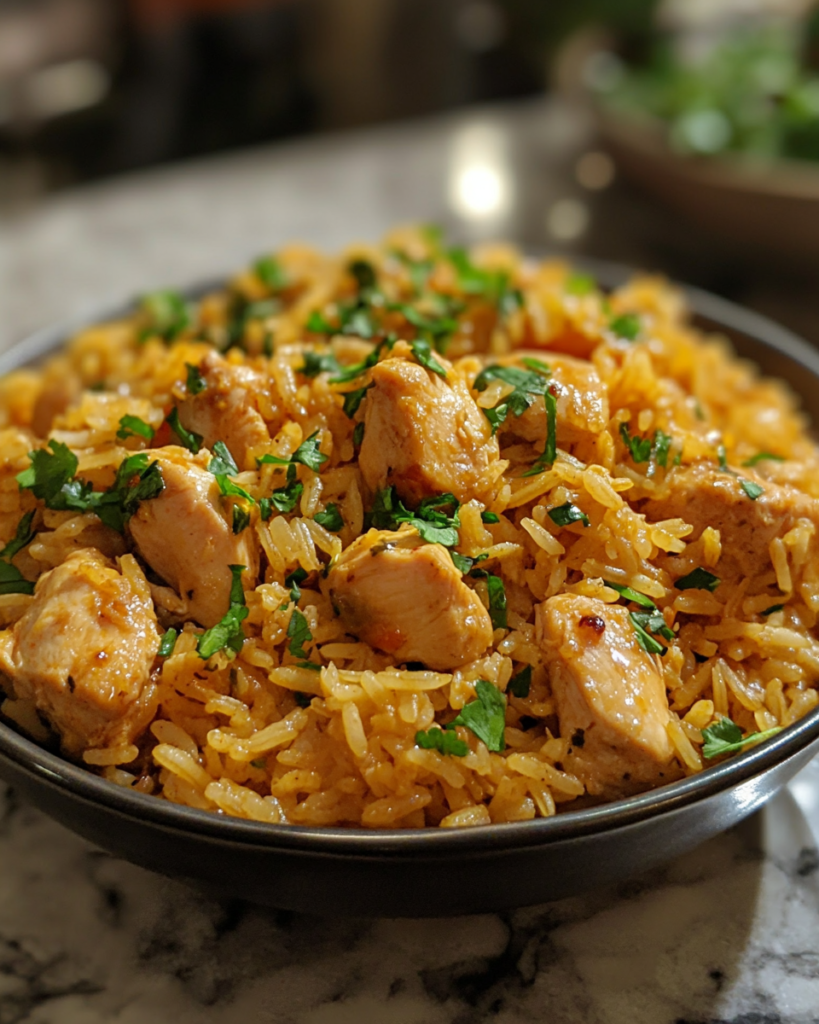
One Pot Chicken Rice: 5 Easy Happy Dinner

Posted on

Uncategorized

Difficulty

Prep time

Cooking time

Total time

Servings

One pot chicken rice is a comforting, flavorful meal that brings together tender chicken, fragrant rice, and savory seasonings in a single pan. This dish is loved for its simplicity and the way every ingredient cooks together, allowing the rice to absorb rich juices from the chicken and aromatics.

It is the kind of recipe that fits both busy weeknights and relaxed family dinners. With minimal cleanup and dependable results, one pot chicken rice offers a satisfying balance of protein, grains, and gentle seasoning that appeals to all ages.

The beauty of this dish lies in its layered flavor. As the chicken browns, it builds a base that carries through the entire pot. The rice cooks slowly in seasoned broth, soaking up every bit of flavor, while onions, garlic, and spices round everything out into a cohesive and hearty meal.

Ingredients Overview

The success of one pot chicken rice depends on a handful of well-chosen ingredients that work together during the cooking process. Each component plays a clear role in creating the final texture and flavor.

Chicken is the star of the dish. Bone-in, skin-on thighs are often preferred because they remain juicy and add depth to the rice as they cook. However, boneless thighs or even chicken breasts can be used for a leaner option, though they may require more careful timing to avoid dryness.

Rice acts as the base and absorbs all the savory liquid in the pot. Long-grain white rice is ideal because it cooks evenly and stays fluffy rather than sticky. Jasmine rice adds a subtle fragrance, while basmati offers a slightly lighter texture. Brown rice can be used, but it requires more liquid and a longer cooking time.

Aromatics like onion and garlic provide the foundational flavor. As they soften and cook in the same pot, they release sweetness and depth that carry through the entire dish. Chicken broth is essential, giving the rice a rich, savory taste compared to plain water.

Seasonings such as paprika, salt, black pepper, and a touch of thyme or bay leaf bring warmth and balance. Olive oil helps brown the chicken and keeps everything from sticking.

Optional additions like peas, carrots, or bell peppers can bring color and subtle sweetness. These vegetables complement the dish without overpowering the main flavors.

Ingredients

6 bone-in, skin-on chicken thighs
1 1/2 cups long-grain white rice
2 tablespoons olive oil
1 medium onion, finely chopped
3 cloves garlic, minced
2 1/2 cups chicken broth
1 teaspoon paprika
1/2 teaspoon dried thyme
1/2 teaspoon salt
1/4 teaspoon black pepper
1 bay leaf
1/2 cup frozen peas
1/2 cup diced carrots
2 tablespoons chopped fresh parsley

Step-by-Step Instructions

Start by patting the chicken thighs dry with paper towels. This step helps the skin brown properly. Season both sides with salt, pepper, and paprika.

Heat olive oil in a large, deep skillet or Dutch oven over medium heat. Once the oil is warm, place the chicken thighs skin-side down. Let them cook undisturbed for about 5–7 minutes until the skin becomes golden and crisp. Flip and cook the other side for another 3–4 minutes. Remove the chicken and set aside.

In the same pot, add the chopped onion. Cook for 3–4 minutes, stirring occasionally, until it softens and turns slightly translucent. Add the minced garlic and cook for about 30 seconds, just until fragrant. Avoid letting the garlic brown too much, as it can turn bitter.

Stir in the rice, coating it with the oil and aromatics. Toasting the rice for 1–2 minutes helps develop a deeper flavor and keeps the grains separate during cooking.

Pour in the chicken broth and gently scrape the bottom of the pot to release any browned bits left from the chicken. These bits add depth to the dish. Add thyme and the bay leaf, then stir everything together.

Return the chicken thighs to the pot, placing them on top of the rice. The liquid should come up around the rice without fully covering the chicken.

Bring the mixture to a gentle simmer, then reduce the heat to low. Cover the pot tightly and let it cook for 20–25 minutes. Avoid lifting the lid too often, as this can release steam and affect the cooking process.

After about 15 minutes, sprinkle the peas and carrots over the rice without stirring. Cover again and continue cooking until the rice is tender and the chicken is fully cooked.

Check for doneness by making sure the rice has absorbed most of the liquid and the chicken reaches an internal temperature of 165°F (74°C). Remove the bay leaf before serving.

Let the dish rest for 5 minutes before fluffing the rice with a fork. Garnish with fresh parsley for a bright finish.

Tips, Variations & Substitutions

For the best texture, always use the correct ratio of liquid to rice. Too much broth can make the rice soft, while too little can leave it undercooked.

If you prefer a lighter version, swap chicken thighs for boneless chicken breasts. Add them later in the cooking process to prevent them from drying out.

Spice variations can change the character of the dish. A pinch of cumin or turmeric can add warmth, while a splash of lemon juice at the end can brighten the overall flavor.

Vegetables can be adjusted based on what is available. Diced bell peppers, green beans, or spinach all work well. Add delicate greens toward the end so they do not overcook.

For a richer taste, a small knob of butter stirred in at the end adds a smooth finish. If you want a slightly crispy bottom layer, allow the rice to cook uncovered for the final few minutes.

Serving Ideas & Occasions

One pot chicken rice is a complete meal on its own, but it pairs nicely with simple sides that add freshness and contrast. A crisp green salad with a light vinaigrette balances the richness of the dish.

Roasted vegetables such as broccoli or zucchini complement the savory flavors without competing for attention. A slice of warm bread can also be served alongside to soak up any remaining juices.

This dish is perfect for family dinners, meal prep, or casual gatherings. It travels well and reheats easily, making it a practical option for packed lunches or shared meals.

For drinks, light white wines or sparkling water with lemon work well, as they refresh the palate between bites.

Nutritional & Health Notes

One pot chicken rice provides a balanced combination of protein, carbohydrates, and fats. Chicken offers a solid source of protein that supports muscle maintenance, while rice supplies steady energy.

Using bone-in chicken adds flavor but also slightly increases fat content. Removing the skin before serving can reduce overall fat while still keeping the dish satisfying.

Adding vegetables boosts fiber, vitamins, and minerals, making the meal more nutritionally complete. Choosing brown rice instead of white rice can increase fiber content, though it will require adjustments in cooking time and liquid.

Portion size plays an important role in keeping the meal balanced. Pairing with fresh vegetables helps round out the plate without adding excess calories.

FAQs

Can I use boneless chicken for one pot chicken rice?

Yes, boneless chicken can be used, but it requires a slightly different approach. Since boneless pieces cook faster than bone-in cuts, they should be added later in the process. This prevents them from becoming dry or overcooked. You can brown them briefly for flavor, remove them, and then return them to the pot during the final 10–15 minutes of cooking. Keeping an eye on doneness is key, as boneless chicken can quickly lose moisture if left too long in the heat.

What type of rice works best for this recipe?

Long-grain white rice is the most reliable choice for one pot chicken rice. It cooks evenly and maintains a light, fluffy texture. Jasmine rice adds a subtle aroma, while basmati gives a slightly firmer grain. Short-grain rice tends to be stickier and may change the texture of the dish. If using brown rice, increase the cooking time and add more liquid, as it takes longer to soften and absorb flavors.

Can I make one pot chicken rice ahead of time?

This dish stores well and can be made ahead for convenience. Once cooked, allow it to cool completely before placing it in an airtight container. It can be refrigerated for up to three days. When reheating, add a splash of broth or water to bring back moisture, as the rice may dry out slightly. Warm it gently on the stove or in the microwave, stirring occasionally to heat evenly without overcooking the chicken.

Why is my rice undercooked or too soft?

Rice texture depends on the balance of liquid, heat, and cooking time. Undercooked rice usually means there was not enough liquid or the pot was uncovered too often, allowing steam to escape. If the rice is too soft, it may have had excess liquid or been cooked too long. Keeping the lid on during simmering and measuring ingredients carefully helps achieve consistent results. Letting the dish rest after cooking also allows the rice to firm up slightly.

Can I freeze one pot chicken rice?

Yes, this dish can be frozen, though the texture of the rice may change slightly. Allow the cooked dish to cool completely, then store it in freezer-safe containers. It can be frozen for up to two months. When ready to eat, thaw in the refrigerator overnight and reheat gently with a bit of added liquid. Stirring occasionally helps restore some of the original texture and keeps the chicken from drying out.

How do I add more flavor without making it too salty?

Flavor can be built through layers rather than relying only on salt. Browning the chicken properly at the start creates a rich base. Aromatics like garlic and onion add depth, while herbs such as thyme or parsley bring freshness. A squeeze of lemon juice at the end can lift the overall taste without adding salt. Using a good-quality broth also makes a noticeable difference in the final flavor.

Can I make this dish in a different type of pot?

A heavy-bottomed pot like a Dutch oven works best because it distributes heat evenly and retains moisture. However, a deep skillet with a tight-fitting lid can also work well. The key is to use a pot that allows enough space for the rice to expand and cook evenly. Avoid very thin pans, as they can cause uneven cooking or burning at the bottom.

[rank_math_breadcrumb]

One Pot Chicken Rice: 5 Easy Happy Dinner

Photo of author
Author: Sophia
Published:

One pot chicken rice is a comforting, flavorful meal that brings together tender chicken, fragrant rice, and savory seasonings in a single pan. This dish is loved for its simplicity and the way every ingredient cooks together, allowing the rice to absorb rich juices from the chicken and aromatics.

It is the kind of recipe that fits both busy weeknights and relaxed family dinners. With minimal cleanup and dependable results, one pot chicken rice offers a satisfying balance of protein, grains, and gentle seasoning that appeals to all ages.

The beauty of this dish lies in its layered flavor. As the chicken browns, it builds a base that carries through the entire pot. The rice cooks slowly in seasoned broth, soaking up every bit of flavor, while onions, garlic, and spices round everything out into a cohesive and hearty meal.

Ingredients Overview

The success of one pot chicken rice depends on a handful of well-chosen ingredients that work together during the cooking process. Each component plays a clear role in creating the final texture and flavor.

Chicken is the star of the dish. Bone-in, skin-on thighs are often preferred because they remain juicy and add depth to the rice as they cook. However, boneless thighs or even chicken breasts can be used for a leaner option, though they may require more careful timing to avoid dryness.

Rice acts as the base and absorbs all the savory liquid in the pot. Long-grain white rice is ideal because it cooks evenly and stays fluffy rather than sticky. Jasmine rice adds a subtle fragrance, while basmati offers a slightly lighter texture. Brown rice can be used, but it requires more liquid and a longer cooking time.

Aromatics like onion and garlic provide the foundational flavor. As they soften and cook in the same pot, they release sweetness and depth that carry through the entire dish. Chicken broth is essential, giving the rice a rich, savory taste compared to plain water.

Seasonings such as paprika, salt, black pepper, and a touch of thyme or bay leaf bring warmth and balance. Olive oil helps brown the chicken and keeps everything from sticking.

Optional additions like peas, carrots, or bell peppers can bring color and subtle sweetness. These vegetables complement the dish without overpowering the main flavors.

Ingredients

6 bone-in, skin-on chicken thighs
1 1/2 cups long-grain white rice
2 tablespoons olive oil
1 medium onion, finely chopped
3 cloves garlic, minced
2 1/2 cups chicken broth
1 teaspoon paprika
1/2 teaspoon dried thyme
1/2 teaspoon salt
1/4 teaspoon black pepper
1 bay leaf
1/2 cup frozen peas
1/2 cup diced carrots
2 tablespoons chopped fresh parsley

Step-by-Step Instructions

Start by patting the chicken thighs dry with paper towels. This step helps the skin brown properly. Season both sides with salt, pepper, and paprika.

Heat olive oil in a large, deep skillet or Dutch oven over medium heat. Once the oil is warm, place the chicken thighs skin-side down. Let them cook undisturbed for about 5–7 minutes until the skin becomes golden and crisp. Flip and cook the other side for another 3–4 minutes. Remove the chicken and set aside.

In the same pot, add the chopped onion. Cook for 3–4 minutes, stirring occasionally, until it softens and turns slightly translucent. Add the minced garlic and cook for about 30 seconds, just until fragrant. Avoid letting the garlic brown too much, as it can turn bitter.

Stir in the rice, coating it with the oil and aromatics. Toasting the rice for 1–2 minutes helps develop a deeper flavor and keeps the grains separate during cooking.

Pour in the chicken broth and gently scrape the bottom of the pot to release any browned bits left from the chicken. These bits add depth to the dish. Add thyme and the bay leaf, then stir everything together.

Return the chicken thighs to the pot, placing them on top of the rice. The liquid should come up around the rice without fully covering the chicken.

Bring the mixture to a gentle simmer, then reduce the heat to low. Cover the pot tightly and let it cook for 20–25 minutes. Avoid lifting the lid too often, as this can release steam and affect the cooking process.

After about 15 minutes, sprinkle the peas and carrots over the rice without stirring. Cover again and continue cooking until the rice is tender and the chicken is fully cooked.

Check for doneness by making sure the rice has absorbed most of the liquid and the chicken reaches an internal temperature of 165°F (74°C). Remove the bay leaf before serving.

Let the dish rest for 5 minutes before fluffing the rice with a fork. Garnish with fresh parsley for a bright finish.

Tips, Variations & Substitutions

For the best texture, always use the correct ratio of liquid to rice. Too much broth can make the rice soft, while too little can leave it undercooked.

If you prefer a lighter version, swap chicken thighs for boneless chicken breasts. Add them later in the cooking process to prevent them from drying out.

Spice variations can change the character of the dish. A pinch of cumin or turmeric can add warmth, while a splash of lemon juice at the end can brighten the overall flavor.

Vegetables can be adjusted based on what is available. Diced bell peppers, green beans, or spinach all work well. Add delicate greens toward the end so they do not overcook.

For a richer taste, a small knob of butter stirred in at the end adds a smooth finish. If you want a slightly crispy bottom layer, allow the rice to cook uncovered for the final few minutes.

Serving Ideas & Occasions

One pot chicken rice is a complete meal on its own, but it pairs nicely with simple sides that add freshness and contrast. A crisp green salad with a light vinaigrette balances the richness of the dish.

Roasted vegetables such as broccoli or zucchini complement the savory flavors without competing for attention. A slice of warm bread can also be served alongside to soak up any remaining juices.

This dish is perfect for family dinners, meal prep, or casual gatherings. It travels well and reheats easily, making it a practical option for packed lunches or shared meals.

For drinks, light white wines or sparkling water with lemon work well, as they refresh the palate between bites.

Nutritional & Health Notes

One pot chicken rice provides a balanced combination of protein, carbohydrates, and fats. Chicken offers a solid source of protein that supports muscle maintenance, while rice supplies steady energy.

Using bone-in chicken adds flavor but also slightly increases fat content. Removing the skin before serving can reduce overall fat while still keeping the dish satisfying.

Adding vegetables boosts fiber, vitamins, and minerals, making the meal more nutritionally complete. Choosing brown rice instead of white rice can increase fiber content, though it will require adjustments in cooking time and liquid.

Portion size plays an important role in keeping the meal balanced. Pairing with fresh vegetables helps round out the plate without adding excess calories.

FAQs

Can I use boneless chicken for one pot chicken rice?

Yes, boneless chicken can be used, but it requires a slightly different approach. Since boneless pieces cook faster than bone-in cuts, they should be added later in the process. This prevents them from becoming dry or overcooked. You can brown them briefly for flavor, remove them, and then return them to the pot during the final 10–15 minutes of cooking. Keeping an eye on doneness is key, as boneless chicken can quickly lose moisture if left too long in the heat.

What type of rice works best for this recipe?

Long-grain white rice is the most reliable choice for one pot chicken rice. It cooks evenly and maintains a light, fluffy texture. Jasmine rice adds a subtle aroma, while basmati gives a slightly firmer grain. Short-grain rice tends to be stickier and may change the texture of the dish. If using brown rice, increase the cooking time and add more liquid, as it takes longer to soften and absorb flavors.

Can I make one pot chicken rice ahead of time?

This dish stores well and can be made ahead for convenience. Once cooked, allow it to cool completely before placing it in an airtight container. It can be refrigerated for up to three days. When reheating, add a splash of broth or water to bring back moisture, as the rice may dry out slightly. Warm it gently on the stove or in the microwave, stirring occasionally to heat evenly without overcooking the chicken.

Why is my rice undercooked or too soft?

Rice texture depends on the balance of liquid, heat, and cooking time. Undercooked rice usually means there was not enough liquid or the pot was uncovered too often, allowing steam to escape. If the rice is too soft, it may have had excess liquid or been cooked too long. Keeping the lid on during simmering and measuring ingredients carefully helps achieve consistent results. Letting the dish rest after cooking also allows the rice to firm up slightly.

Can I freeze one pot chicken rice?

Yes, this dish can be frozen, though the texture of the rice may change slightly. Allow the cooked dish to cool completely, then store it in freezer-safe containers. It can be frozen for up to two months. When ready to eat, thaw in the refrigerator overnight and reheat gently with a bit of added liquid. Stirring occasionally helps restore some of the original texture and keeps the chicken from drying out.

How do I add more flavor without making it too salty?

Flavor can be built through layers rather than relying only on salt. Browning the chicken properly at the start creates a rich base. Aromatics like garlic and onion add depth, while herbs such as thyme or parsley bring freshness. A squeeze of lemon juice at the end can lift the overall taste without adding salt. Using a good-quality broth also makes a noticeable difference in the final flavor.

Can I make this dish in a different type of pot?

A heavy-bottomed pot like a Dutch oven works best because it distributes heat evenly and retains moisture. However, a deep skillet with a tight-fitting lid can also work well. The key is to use a pot that allows enough space for the rice to expand and cook evenly. Avoid very thin pans, as they can cause uneven cooking or burning at the bottom.
Name

Lorem ipsum dolor sit amet, consectetur adipiscing elit. Suspendisse varius enim in eros elementum tristique. Duis cursus, mi quis viverra ornare, eros dolor interdum nulla, ut commodo diam libero vitae erat.

You Might Also Like...

Simple Chicken Breast Dinner Recipes 5 Easy Delicious Meals

Simple Chicken Breast Dinner Recipes 5 Easy Delicious Meals

Healthy Chicken Breast Tacos Meal 7 Quick Fresh Delightful

Healthy Chicken Breast Tacos Meal 7 Quick Fresh Delightful

Cheesy Chicken Breast Casserole Recipe 5 Ultimate Surprising

Cheesy Chicken Breast Casserole Recipe 5 Ultimate Surprising

Easy Chicken Breast Soup Recipe 7 Simple Cozy Comforting Bowls

Easy Chicken Breast Soup Recipe 7 Simple Cozy Comforting Bowls

Tags:

You might also like these recipes

Leave a Comment