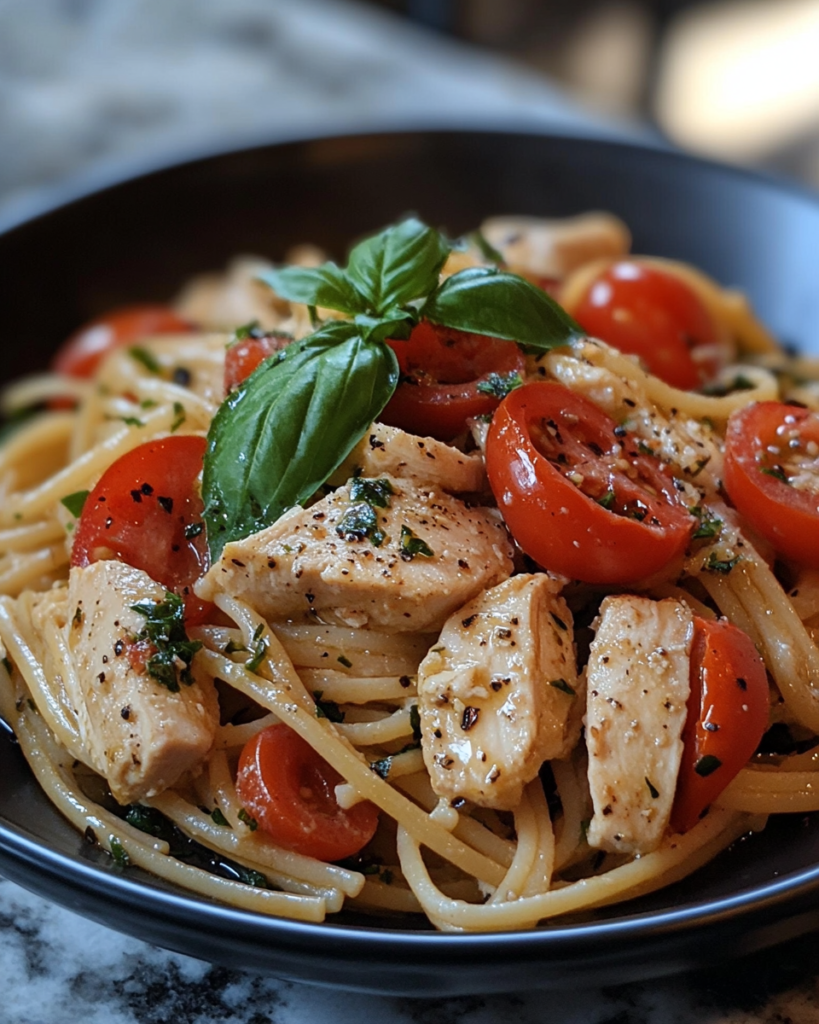
Bruschetta Chicken Pasta with Fresh Tomatoes & Basil is a comforting Italian-inspired dish that brings together juicy chicken, ripe tomatoes, fragrant basil, and tender pasta in a bright, savory combination. It captures the spirit of classic bruschetta and transforms it into a hearty meal that fits perfectly for weeknight dinners or casual gatherings.
The balance of textures is what makes this dish stand out. The chicken is lightly seasoned and seared until golden, while the tomatoes soften just enough to release their natural juices without losing their shape. Fresh basil adds a clean herbal note that ties everything together.
Tossed with warm pasta and a light garlic-infused olive oil base, every bite feels vibrant and satisfying. It is a straightforward dish that relies on quality ingredients rather than complexity, making it a reliable favorite for many home kitchens.
Ingredients Overview
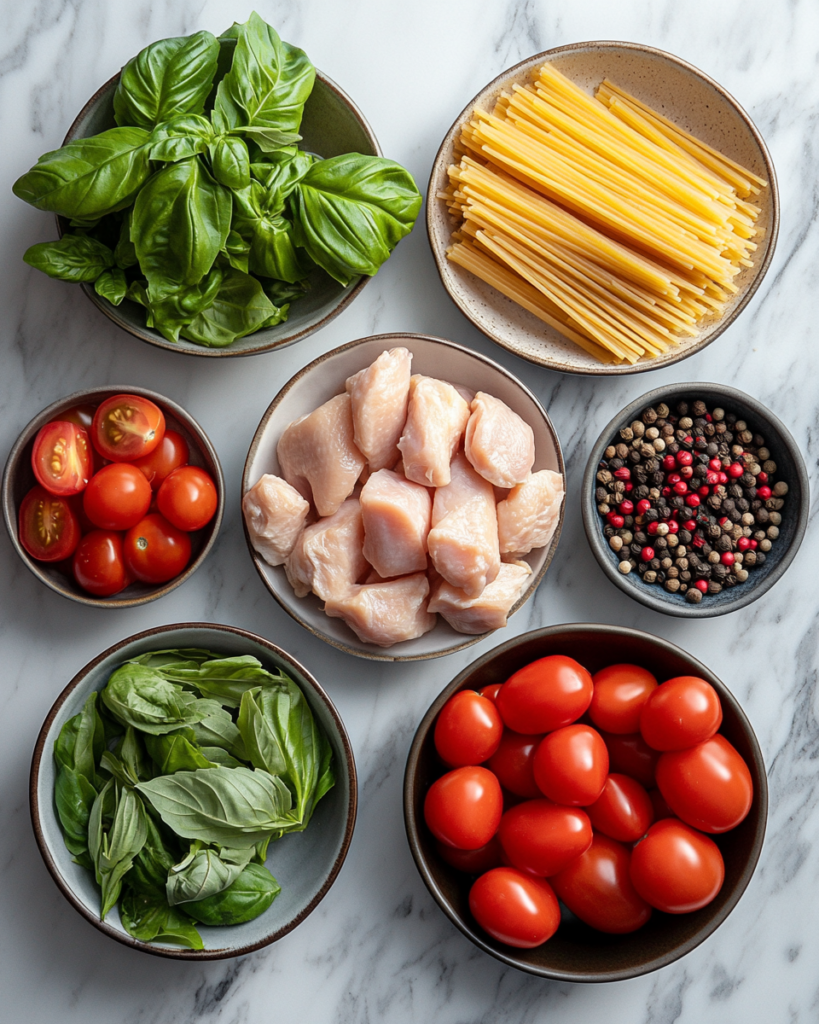
This dish relies on simple, fresh components that work together to create depth of flavor without heavy sauces. Chicken breast is the protein foundation, offering a lean and tender bite when properly cooked. Seasoning it well before cooking helps build a savory base.
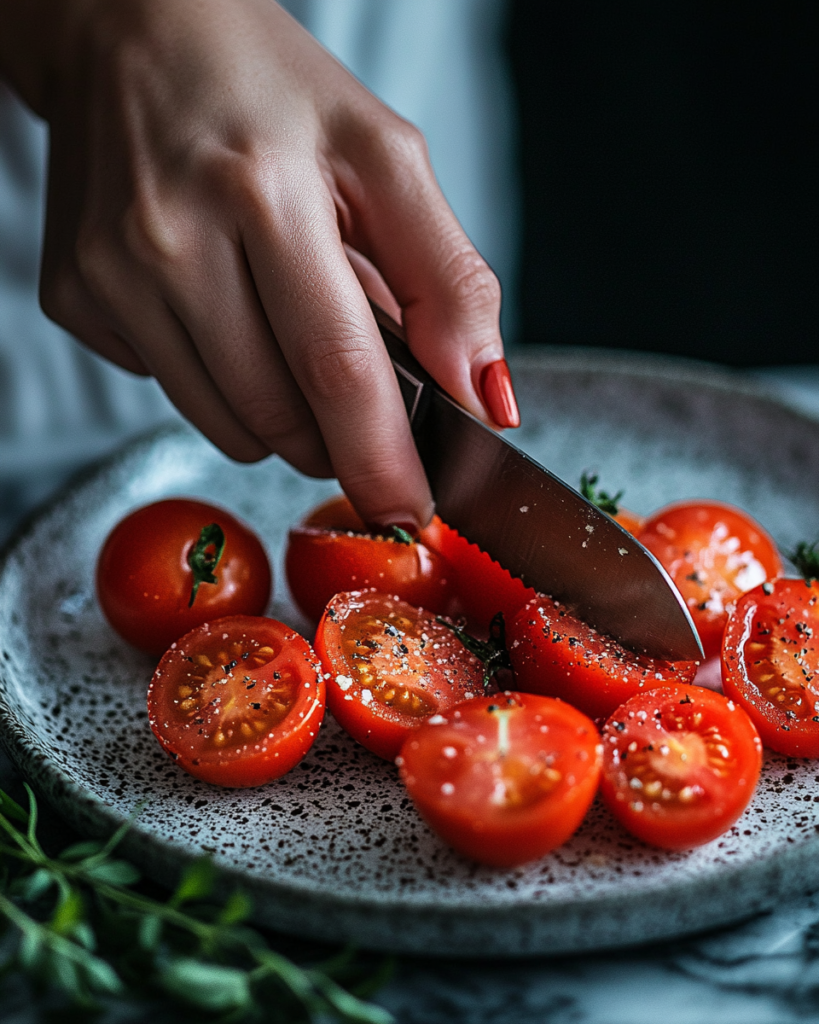
Fresh tomatoes are essential for the bruschetta-style topping. They bring natural sweetness and acidity, which balances the richness of olive oil and chicken. Roma or vine-ripened tomatoes work especially well because they hold their shape while still being juicy.
Basil adds an aromatic finish that lifts the entire dish. It should be added at the end to preserve its fragrance and color. Garlic provides warmth and depth, infusing the oil and tomatoes with a subtle sharpness that enhances overall flavor.
Pasta acts as the comforting base that carries all the ingredients. Shapes like penne or spaghetti work well because they hold the light sauce and mix evenly with the chicken and tomato mixture.
Olive oil is important for binding everything together, creating a silky coating that carries seasoning throughout the dish. A touch of parmesan at the end adds a mild salty finish, rounding out the flavors.
Substitutions are flexible. Chicken thighs can replace chicken breast for a richer taste. Cherry tomatoes can be used instead of larger varieties for a slightly sweeter profile. Gluten-free pasta also works well without changing the overall structure of the dish.
Ingredients
12 ounces pasta (penne or spaghetti)
2 large chicken breasts, cut into bite-sized pieces
2 tablespoons olive oil
3 cloves garlic, minced
4 medium Roma tomatoes, diced
1/3 cup fresh basil leaves, chopped
1/2 teaspoon salt
1/2 teaspoon black pepper
1/2 teaspoon Italian seasoning
1/4 teaspoon red pepper flakes (optional)
1/3 cup grated parmesan cheese
1 tablespoon butter (optional for richness)
1 tablespoon lemon juice
Step-by-Step Instructions
Start by bringing a large pot of salted water to a boil. Add the pasta and cook until al dente according to package directions. Reserve a small cup of pasta water before draining, as it can help adjust the sauce later if needed.
While the pasta cooks, season the chicken pieces with salt, black pepper, and Italian seasoning. Heat olive oil in a large skillet over medium-high heat. Add the chicken in a single layer and cook until golden on the outside and fully cooked through. Stir occasionally to ensure even browning.
Once the chicken is done, remove it from the skillet and set it aside. In the same pan, reduce the heat slightly and add minced garlic. Cook briefly until fragrant, being careful not to let it burn.
Add diced tomatoes to the skillet and stir gently. Allow them to cook for several minutes until they begin to soften and release their juices. This forms a light, fresh sauce that coats the pasta later.
Return the cooked chicken to the skillet and mix it with the tomato mixture. Add red pepper flakes if a slight heat is desired. Stir in lemon juice to brighten the flavors and balance the richness of the oil.
Add the drained pasta directly into the skillet. Toss everything together until the pasta is evenly coated. If the mixture feels dry, add a small amount of reserved pasta water to loosen it.
Finish by adding fresh basil and parmesan cheese. Stir gently so the basil stays vibrant and aromatic. A small amount of butter can be added for extra smoothness if desired.
Serve immediately while warm, allowing the flavors to shine at their peak. The final dish should be glossy, fragrant, and well combined.
Tips, Variations & Substitutions
For a deeper flavor, marinate the chicken in olive oil, garlic, and Italian seasoning for 30 minutes before cooking. This helps the seasoning penetrate the meat more thoroughly.
If you prefer a lighter version, reduce the amount of olive oil and skip the butter. The tomatoes and lemon juice still provide plenty of moisture and flavor.
Vegetable additions like spinach or zucchini can be stirred in during the final minutes of cooking for extra color and texture. Roasted cherry tomatoes can also be used for a slightly sweeter profile.
For a creamier variation, a small splash of cream can be added at the end, though it will shift the dish away from its traditional bruschetta-style profile.
Whole wheat or chickpea pasta can be used for a higher fiber option without changing the structure of the dish too much.
Serving Ideas & Occasions
This pasta works well as a main dish for weeknight dinners, especially when a quick but flavorful meal is needed. It also fits nicely into casual gatherings where a shareable pasta dish is preferred.
It pairs well with simple sides like garlic bread or a light green salad dressed with lemon vinaigrette. These sides help balance the richness of the pasta.
For drinks, sparkling water with lemon or a light iced tea complements the freshness of the tomatoes and basil. The dish is also suitable for warm-weather meals due to its bright, herb-forward profile.
It can be served for family dinners, small celebrations, or meal prep for the week ahead, as it reheats well while maintaining flavor.
Nutritional & Health Notes
This dish offers a balanced combination of protein, carbohydrates, and healthy fats. Chicken provides lean protein that supports satiety, while olive oil contributes heart-healthy fats.
Tomatoes bring vitamin C and antioxidants, especially lycopene, which is naturally present in cooked tomato dishes. Basil adds small amounts of vitamins and aromatic compounds that enhance flavor without adding calories.
Pasta supplies energy through carbohydrates, making the dish satisfying and suitable for active days. Portion control can help adjust calorie intake depending on dietary needs.
Using whole grain pasta or reducing cheese can slightly lower calorie density while maintaining flavor. Overall, it is a balanced meal that fits into a wide range of eating styles.
FAQs
Can I use a different type of pasta?
Yes, many pasta shapes work well in this dish. Penne, fusilli, and spaghetti are all good choices because they hold sauce or mix evenly with the ingredients. Short pasta tends to catch bits of tomato and chicken, while long pasta creates a smoother bite. The cooking time may vary slightly depending on the type chosen, so it is best to follow package instructions and aim for an al dente texture to maintain structure when mixing with the sauce.
Can I prepare this dish ahead of time?
This pasta can be prepared ahead, though it is best enjoyed fresh. If making in advance, store the pasta and sauce separately when possible. This helps maintain texture and prevents the pasta from absorbing too much moisture. When reheating, add a small splash of water or olive oil to restore consistency. Fresh basil should be added after reheating to preserve its aroma and color.
What type of tomatoes work best?
Roma and vine-ripened tomatoes are ideal because they have a good balance of firmness and juiciness. Cherry tomatoes can also be used for a slightly sweeter flavor and more concentrated bursts of juice. Avoid overly watery varieties, as they can make the dish too loose. Fresh, ripe tomatoes always deliver the best results in this recipe.
Can I use chicken thighs instead of chicken breast?
Yes, chicken thighs are a great alternative and offer a richer flavor due to their higher fat content. They remain tender and juicy even with longer cooking times. Cut them into similar-sized pieces as chicken breast for even cooking. The seasoning and cooking method remain the same, though thighs may require a slightly longer searing time.
How do I keep the pasta from drying out?
Saving a small amount of pasta water is the best method to maintain moisture. The starch in the water helps bind the sauce and keeps everything silky. Adding it gradually while tossing the pasta allows you to control the consistency. Olive oil also helps coat the pasta and prevent dryness.
Can I make this dish vegetarian?
Yes, the chicken can be replaced with plant-based proteins like chickpeas or sautéed mushrooms. Both options absorb flavor well and maintain a satisfying texture. Mushrooms, in particular, add a savory depth that pairs nicely with tomatoes and basil. The rest of the ingredients remain unchanged.
Is this dish suitable for meal prep?
This pasta works well for meal prep when stored in airtight containers. It can be kept in the refrigerator for several days. For best results, add fresh basil after reheating to restore freshness. The flavors often deepen slightly after resting, making it enjoyable even on the second day