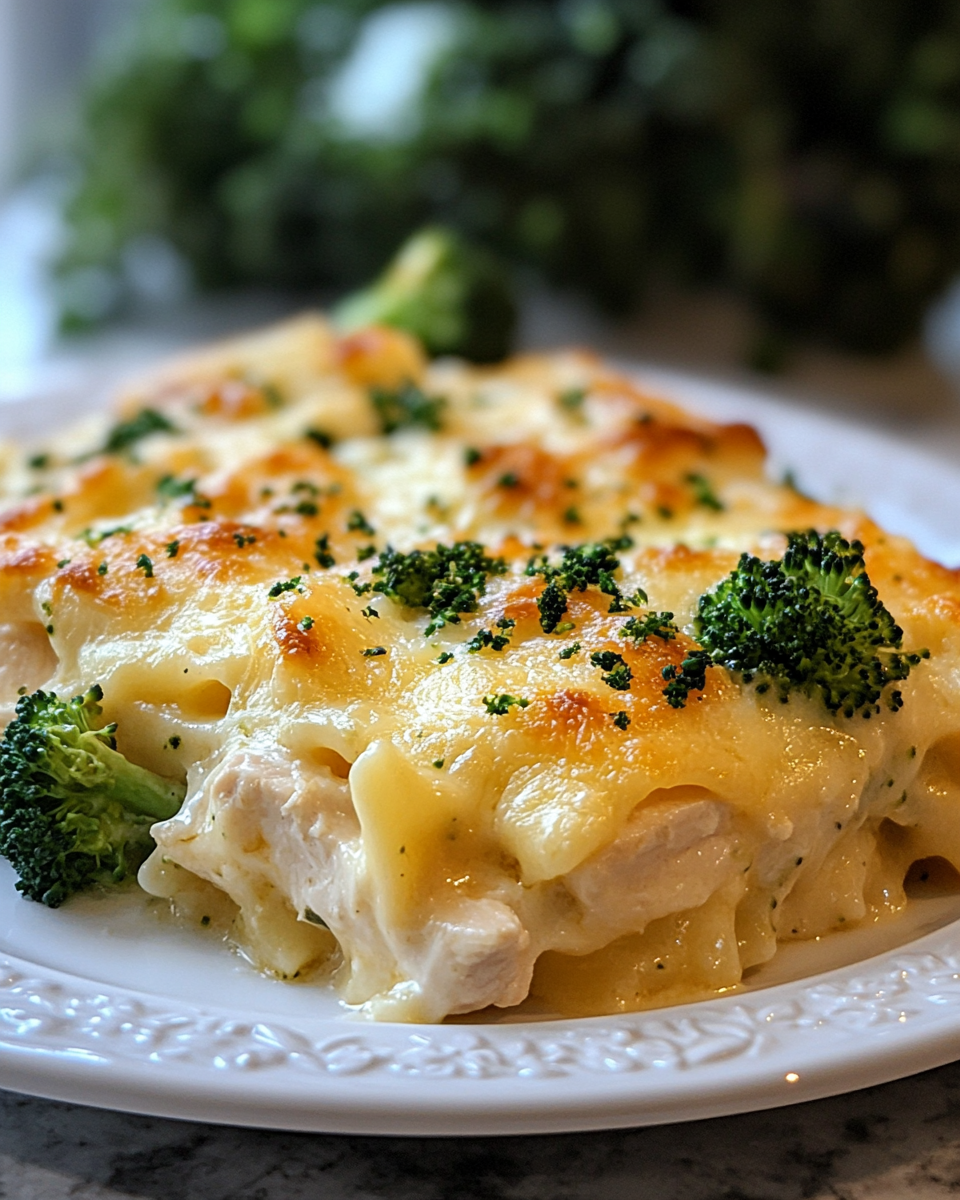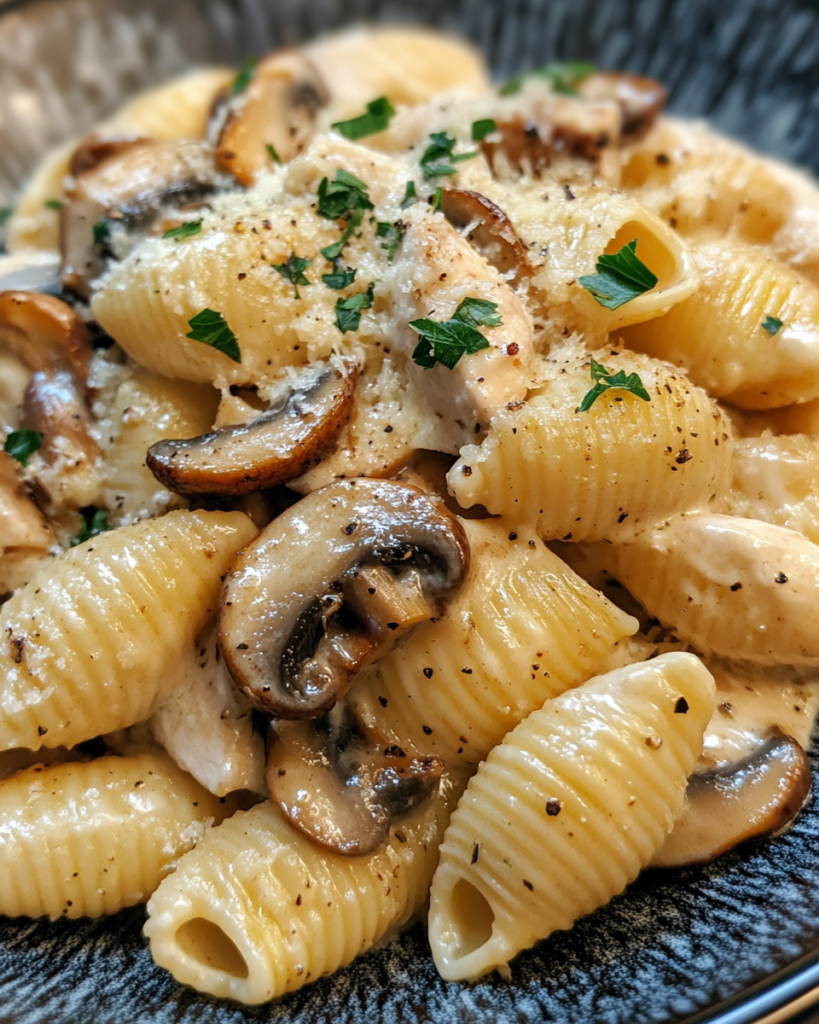
Creamy pasta shells filled with tender chicken and mushrooms in a smooth Parmesan sauce bring a warm, satisfying dinner option to the table. Cheesy Chicken Mushroom Shells in Parmesan Cream Sauce combine soft pasta, savory filling, and a silky sauce that coats every bite.
This dish focuses on balanced textures: juicy chicken pieces, earthy mushrooms, and pasta shells that hold the filling and sauce together. The Parmesan cream sauce adds a silky layer that ties everything into a unified dish that feels comforting and satisfying.
It works well for family dinners, shared meals, or a quiet evening plate when something warm and filling is desired. Each component is prepared separately and then combined for a layered result that holds both structure and softness.
Ingredients Overview
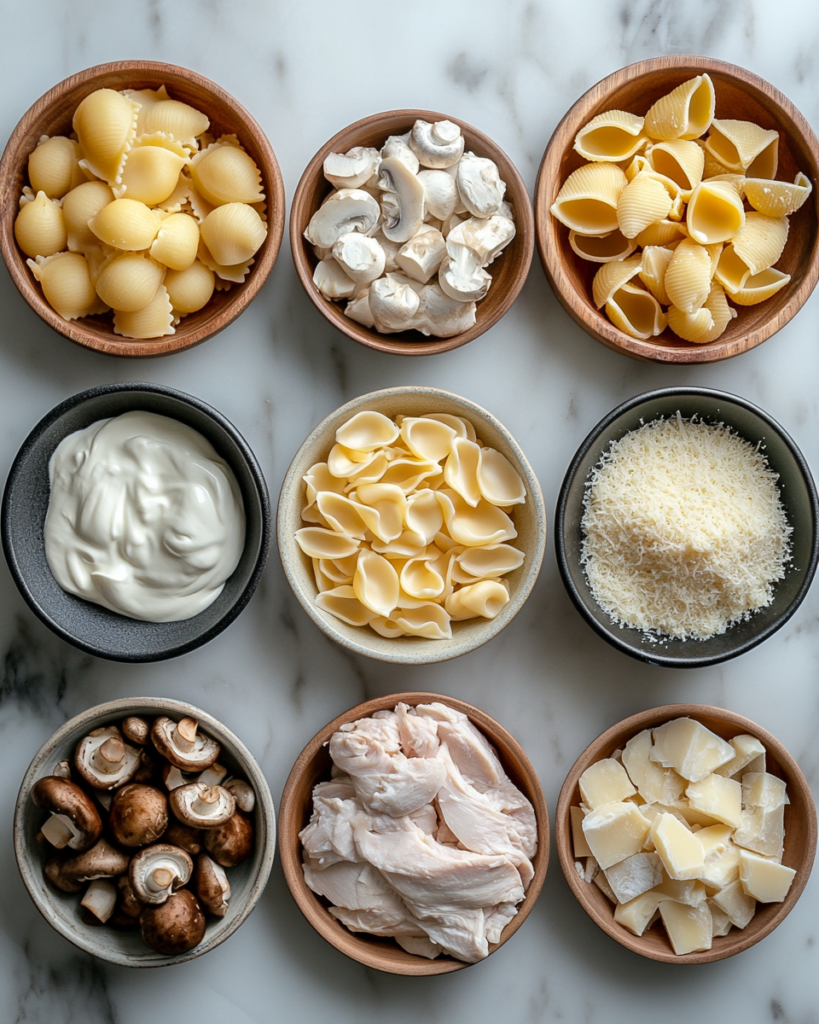
The foundation of this dish begins with pasta shells, which act as small cups holding the chicken and mushroom mixture. Their shape is important because it traps sauce and filling in every bite, giving a consistent texture experience.
Chicken breast is used for its lean structure and mild taste, allowing the sauce and seasonings to stand out. When cut into small pieces, it cooks quickly and blends easily with the mushrooms.
Mushrooms bring an earthy depth that balances the creamy sauce. When sautéed, they release moisture and develop a tender bite that pairs well with poultry.
The Parmesan cream sauce is built from butter, cream, and freshly grated Parmesan cheese. Butter creates a base, cream adds smooth texture, and Parmesan contributes a salty, nutty layer that defines the sauce.
Garlic and onion form the aromatic base, adding depth without overpowering the main ingredients. A small amount of seasoning ties everything together while keeping the profile balanced.
Milk or pasta water can be added to adjust consistency if the sauce becomes too thick. This flexibility helps maintain a smooth coating for the shells and filling.
Ingredients
12 ounces large pasta shells
2 chicken breasts, diced
8 ounces mushrooms, sliced
3 tablespoons butter
3 cloves garlic, minced
1 small onion, finely chopped
1 ½ cups heavy cream
1 cup grated Parmesan cheese
1 cup milk
2 tablespoons olive oil
1 teaspoon salt
½ teaspoon black pepper
½ teaspoon dried thyme
½ teaspoon paprika
1 cup reserved pasta water
2 tablespoons chopped parsley
Step-by-Step Instructions
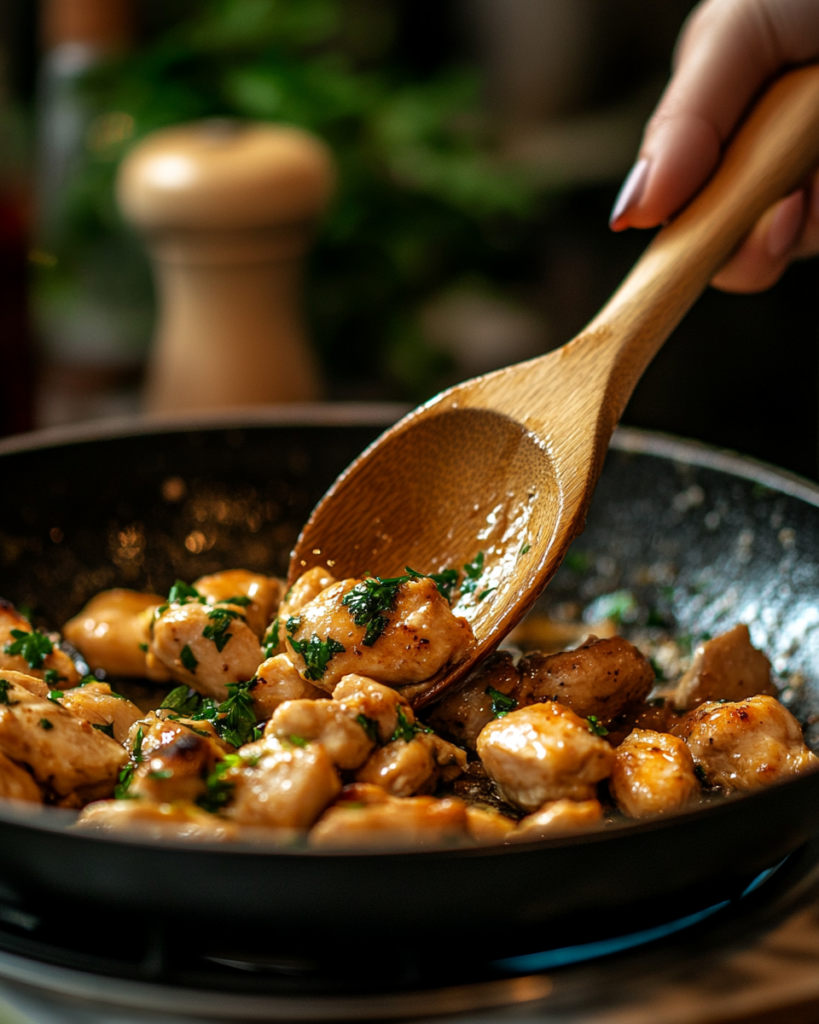
Begin by cooking the pasta shells in a large pot of salted water. Cook until tender but still firm enough to hold shape. Drain and reserve one cup of pasta water for later use.
While the pasta cooks, heat olive oil in a large skillet over medium heat. Add diced chicken pieces and cook until they turn lightly golden and fully cooked through. Remove the chicken from the pan and set aside.
In the same skillet, add butter and allow it to melt. Add chopped onion and cook until soft and translucent. Stir in minced garlic and cook briefly until aromatic.
Add sliced mushrooms to the skillet. Cook until they release moisture and begin to soften. Allow the liquid to reduce slightly so the mushrooms develop a firmer texture.
Return the cooked chicken to the skillet. Stir in salt, black pepper, thyme, and paprika. Mix gently so the seasoning spreads evenly across the mixture.
Pour in heavy cream and milk, stirring slowly to combine. Keep heat at medium-low so the mixture stays smooth without boiling too strongly.
Add grated Parmesan cheese gradually while stirring. The sauce will begin to thicken as the cheese melts into the cream base.
If the sauce becomes too thick, add small amounts of reserved pasta water until a smooth coating consistency forms.
Add the cooked pasta shells into the skillet. Fold gently so each shell is coated with sauce and filled with chicken and mushroom pieces.
Allow the mixture to simmer briefly so flavors blend together. Stir carefully to avoid breaking the shells.
Finish with chopped parsley for a light herbal note before serving.
Tips, Variations & Substitutions
Smaller pasta shapes can be used if shells are not available, though shells provide the best filling structure. Rotini or penne can hold sauce well but will not trap filling in the same way.
Chicken thighs can replace chicken breasts for a slightly juicier texture. They hold moisture well during cooking and pair smoothly with the cream sauce.
Different mushrooms such as cremini or button mushrooms both work in this dish. Cremini offer a deeper earthy tone while button mushrooms provide a milder profile.
For a lighter sauce, part of the cream can be replaced with additional milk. The texture will be slightly thinner but still smooth when combined with Parmesan.
Fresh herbs such as basil or thyme can be added at the end for a fresh layer of aroma. Adding herbs earlier in cooking will soften their impact.
A small pinch of red pepper flakes can introduce gentle heat without changing the overall structure of the dish.
Serving Ideas & Occasions
This dish pairs well with simple sides like steamed vegetables, roasted carrots, or a crisp green salad. These lighter sides balance the creamy texture of the pasta.
It also works well as a shared meal for family gatherings or casual dinners where a warm, filling dish is desired. The creamy sauce holds well for short periods after cooking, making it suitable for serving in batches.
A glass of chilled sparkling water or a light juice complements the creamy profile without overpowering the flavors.
Nutritional & Health Notes
This recipe contains a balance of protein from chicken, carbohydrates from pasta, and fats from cream and cheese. It offers a filling meal option that provides sustained energy.
Mushrooms contribute fiber and natural compounds that add depth without heavy calories. Garlic and onion provide aromatic components along with small nutritional benefits.
Portion size can be adjusted depending on dietary needs. Reducing cheese or cream slightly will lower fat content while still maintaining a creamy texture.
FAQs
Can other pasta shapes be used instead of shells?
Yes, other pasta shapes can be used if shells are not available. Shapes such as penne, fusilli, or rigatoni can hold sauce well and mix easily with the chicken and mushrooms. However, shells offer a unique structure that holds filling inside each piece, creating a more layered texture. When using other shapes, the dish becomes more mixed rather than filled, but the flavor profile remains consistent.
Can dairy alternatives be used in the sauce?
Dairy alternatives such as plant-based cream and milk substitutes can be used. Coconut cream or oat-based cooking cream can replace heavy cream, though the flavor will shift slightly. Nutritional yeast may be added to mimic some of the savory depth from Parmesan. The texture may be slightly different, but the dish will still maintain a creamy consistency when cooked gently and stirred well.
How can the sauce thickness be controlled?
Sauce thickness can be adjusted using reserved pasta water or additional milk. If the sauce becomes too thick during cooking, small amounts of liquid can be added gradually while stirring. If the sauce is too thin, simmering gently allows excess moisture to reduce. Adding Parmesan slowly also helps control thickness, as it naturally thickens the sauce when melted.
Can vegetables be added to this dish?
Yes, vegetables such as spinach, peas, or bell peppers can be added. Spinach can be stirred in at the end so it wilts gently. Peas can be added during the final simmer for a slight sweetness. Bell peppers can be sautéed with onions for additional texture. These additions blend well with the creamy sauce and do not overpower the main ingredients.
Can this dish be prepared ahead of serving?
Yes, this dish can be prepared ahead and stored in a covered container. When reheating, a small amount of milk or cream may be added to restore the sauce consistency. Gentle heating on low temperature is recommended to prevent separation of the sauce. Stirring during reheating helps bring the mixture back to a smooth texture.
What type of Parmesan works best?
Freshly grated Parmesan works best for this recipe. It melts more smoothly into the cream sauce and creates a consistent texture. Pre-grated varieties can be used but may not melt as evenly due to added stabilizers. A finely grated texture helps it blend into the sauce without forming clumps.
Can this dish be frozen?
Yes, this dish can be frozen after cooking. It should be stored in a sealed container once cooled. When reheating, slow warming is recommended to help the sauce return to a smooth texture. Adding a small amount of cream or milk during reheating can help restore consistency. Pasta texture may soften slightly after freezing but the flavor remains steady.