Chicken cabbage skillet is a simple, hearty dish that brings together tender chicken and lightly caramelized cabbage in one pan. It’s the kind of meal that feels satisfying without being heavy, making it perfect for busy weeknights or relaxed weekend cooking.
The beauty of a chicken cabbage skillet lies in its balance of flavor and texture. Juicy pieces of chicken soak up savory seasonings while cabbage softens and develops a subtle sweetness as it cooks. With minimal ingredients and straightforward steps, this dish proves that everyday cooking can still feel special and deeply satisfying.
Ingredients Overview

The success of a chicken cabbage skillet starts with a handful of well-chosen ingredients that work together in a balanced way. Chicken is the main protein, offering a mild flavor that pairs well with bold or simple seasonings. Boneless, skinless chicken thighs are often preferred because they stay juicy during cooking, but chicken breast works well for a leaner option.
Cabbage plays an equally important role. When cooked properly, it becomes tender with slightly crisp edges and a naturally sweet taste. Green cabbage is the most common choice due to its sturdy texture, though savoy cabbage can add a softer, more delicate bite.
Aromatics such as onion and garlic build the base flavor. As they cook, they release a rich, savory aroma that enhances both the chicken and cabbage. A small amount of oil helps everything cook evenly and prevents sticking, while also encouraging light browning.
Seasonings like paprika, black pepper, and salt add depth without overpowering the dish. Soy sauce or a splash of broth can be added for extra richness and moisture. If you prefer a brighter flavor, a squeeze of lemon at the end can bring everything together.
This dish is flexible, allowing for simple substitutions. Turkey can replace chicken, and red cabbage can be used for a slightly different taste and color. Even a pinch of chili flakes can be added for gentle heat.
Ingredients
1 pound boneless, skinless chicken thighs, cut into bite-sized pieces
1/2 medium green cabbage, thinly sliced
1 small onion, thinly sliced
3 cloves garlic, minced
2 tablespoons olive oil
1 teaspoon paprika
1/2 teaspoon salt
1/2 teaspoon black pepper
1 tablespoon soy sauce
1/4 cup chicken broth
1 teaspoon lemon juice (optional)
2 tablespoons chopped fresh parsley (optional)
Step-by-Step Instructions
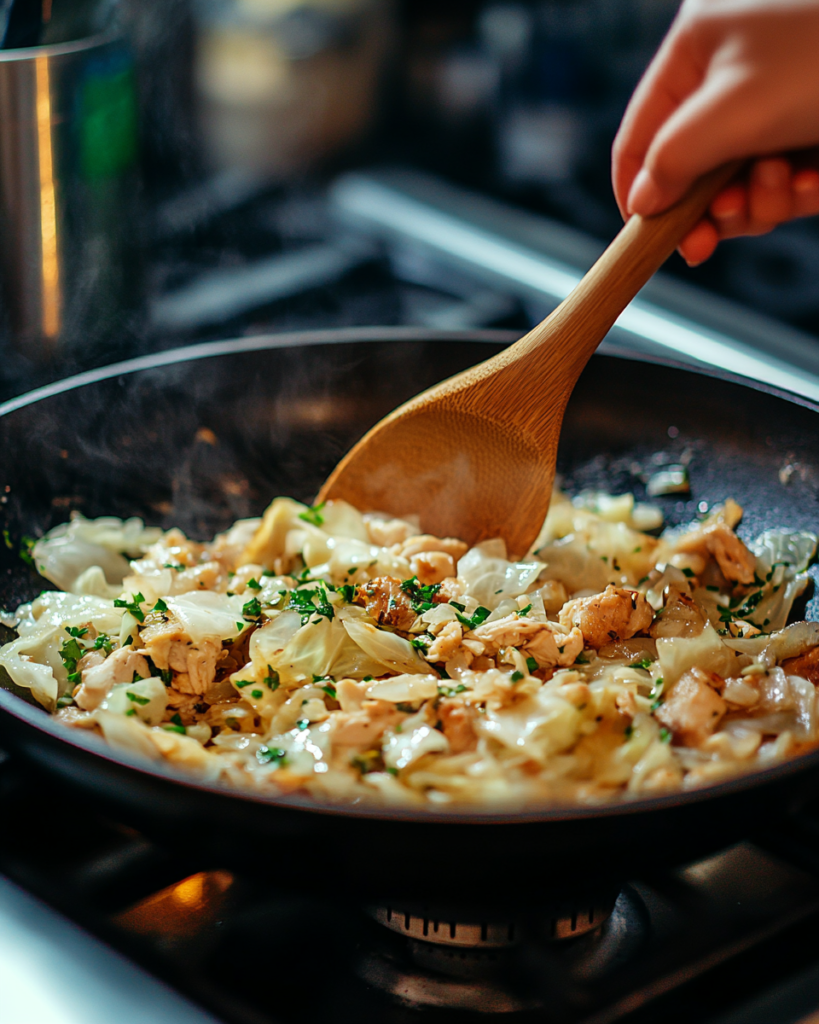
Start by preparing all your ingredients. Slice the cabbage into thin strips, cut the chicken into evenly sized pieces, and mince the garlic. Keeping everything ready before cooking helps the process move smoothly and prevents overcooking.
Heat a large skillet over medium-high heat and add one tablespoon of olive oil. Once the oil is hot, add the chicken pieces in a single layer. Let them cook undisturbed for about 4–5 minutes so they develop a golden-brown surface. Stir and continue cooking for another 3–4 minutes until the chicken is fully cooked through. Remove the chicken from the skillet and set it aside.
In the same skillet, add the remaining tablespoon of olive oil. Add the sliced onion and cook for 2–3 minutes until it softens. Stir in the garlic and cook for about 30 seconds, just until fragrant. Be careful not to let the garlic burn, as it can turn bitter quickly.
Add the sliced cabbage to the skillet. It may seem like a lot at first, but it will shrink as it cooks. Stir well to coat it with the oil and aromatics. Cook for 8–10 minutes, stirring occasionally, until the cabbage becomes tender and slightly browned at the edges.
Return the cooked chicken to the skillet. Sprinkle in the paprika, salt, and black pepper. Pour in the soy sauce and chicken broth, then stir everything together. Let the mixture cook for another 3–5 minutes so the flavors blend and the liquid reduces slightly.
Taste and adjust seasoning if needed. If you like a hint of brightness, add a small squeeze of lemon juice at this stage.
Remove from heat and sprinkle with chopped parsley if using. Serve warm directly from the skillet.
Avoid overcrowding the pan when cooking the chicken, as this can cause it to steam instead of brown. Also, keep an eye on the cabbage to prevent overcooking, which can lead to a mushy texture.
Tips, Variations & Substitutions
For the best flavor, allow the chicken to brown properly before stirring. This step adds depth and creates a more satisfying texture. Using a large skillet helps prevent overcrowding and allows ingredients to cook evenly.
If you prefer a bit of spice, add red pepper flakes or a dash of hot sauce. For a slightly smoky flavor, smoked paprika works well in place of regular paprika.
You can add extra vegetables to make the dish more filling. Bell peppers, carrots, or mushrooms blend nicely with the cabbage and chicken. Just slice them thinly so they cook at the same rate.
For a low-sodium version, reduce the soy sauce and replace it with additional broth or a splash of water. If you’re following a low-carb plan, this dish already fits well without modifications.
Vegetarian versions can be made by swapping chicken for tofu or chickpeas. Be sure to cook tofu until golden for the best texture.
Fresh herbs like thyme or dill can also be added at the end for a different flavor profile.
Serving Ideas & Occasions
Chicken cabbage skillet is versatile enough to serve on its own or alongside simple sides. It pairs well with steamed rice, mashed potatoes, or even crusty bread that can soak up the flavorful juices.
For a lighter option, serve it over cauliflower rice or alongside a crisp green salad. A simple cucumber salad with a light dressing complements the warm, savory flavors of the skillet dish.
This recipe is ideal for weeknight dinners when time is limited but a satisfying meal is still important. It also works well for meal prep since it reheats nicely and maintains its texture.
It can be served family-style straight from the skillet, making it a relaxed and comforting choice for casual gatherings.
Nutritional & Health Notes
Chicken cabbage skillet offers a balanced combination of protein, fiber, and essential nutrients. Chicken provides high-quality protein, which supports muscle maintenance and helps keep you feeling full.
Cabbage is low in calories but rich in vitamins such as vitamin C and vitamin K. It also contains fiber, which supports digestion and contributes to overall fullness.
Using a moderate amount of oil keeps the dish lighter while still allowing for proper cooking. Choosing chicken breast instead of thighs can reduce fat content, though thighs provide more flavor and tenderness.
The dish can easily fit into a variety of eating patterns, including low-carb and gluten-free diets, especially when using gluten-free soy sauce.
Keeping sodium levels in check by adjusting seasoning makes it suitable for those watching their salt intake.
FAQs
Can I use chicken breast instead of thighs?
Yes, chicken breast works well in a chicken cabbage skillet. It is leaner and cooks slightly faster than thighs, so be careful not to overcook it. Cut the breast into even pieces and cook just until it reaches a safe internal temperature. Since breast meat can dry out more easily, you may want to add a bit more broth to keep the dish moist. The overall flavor will be slightly lighter, but still very satisfying when combined with the cabbage and seasonings.
How do I store leftovers?
Store leftover chicken cabbage skillet in an airtight container in the refrigerator for up to 3–4 days. Allow the dish to cool completely before sealing to maintain freshness. When reheating, use a skillet over medium heat or a microwave, adding a small splash of water or broth to prevent it from drying out. Stir occasionally while reheating to distribute heat evenly. This dish holds up well, making it a practical option for meal prep.
Can I freeze this dish?
Yes, chicken cabbage skillet can be frozen, though the texture of the cabbage may soften slightly after thawing. To freeze, let the dish cool completely and transfer it to freezer-safe containers. It can be stored for up to 2 months. Thaw overnight in the refrigerator before reheating. Warm it gently on the stovetop to help preserve the texture as much as possible. Adding a small amount of fresh cabbage during reheating can improve texture.
What type of cabbage works best?
Green cabbage is the most commonly used for this recipe because it holds its shape well during cooking and develops a mild sweetness. Savoy cabbage is a softer alternative with a slightly more delicate texture. Red cabbage can also be used, though it has a firmer texture and a slightly stronger flavor. Whichever type you choose, slice it thinly for even cooking and the best overall texture.
Can I make this dish ahead of time?
Yes, chicken cabbage skillet can be made ahead and reheated when needed. Prepare the dish as instructed, then store it in the refrigerator once cooled. When ready to serve, reheat gently on the stovetop or in the microwave. If the mixture seems dry, add a splash of broth or water while reheating. Making it ahead allows the flavors to blend even more, resulting in a richer taste the next day.
How can I add more flavor?
To deepen the flavor, consider adding ingredients like a splash of Worcestershire sauce, a pinch of smoked paprika, or a bit of grated ginger. Cooking the chicken until well browned also adds richness. Fresh herbs such as parsley or thyme added at the end can brighten the dish. Adjusting the balance of salt and acidity, such as a squeeze of lemon juice, can also make the flavors more vibrant.
Is this dish suitable for low-carb diets?
Yes, chicken cabbage skillet is naturally low in carbohydrates, making it a great option for low-carb eating. Cabbage is a low-carb vegetable that still provides fiber and nutrients, while chicken offers protein without added carbs. To keep it fully low-carb, avoid serving it with rice or bread and instead pair it with cauliflower rice or enjoy it on its own. Adjust seasonings to suit your dietary preferences.