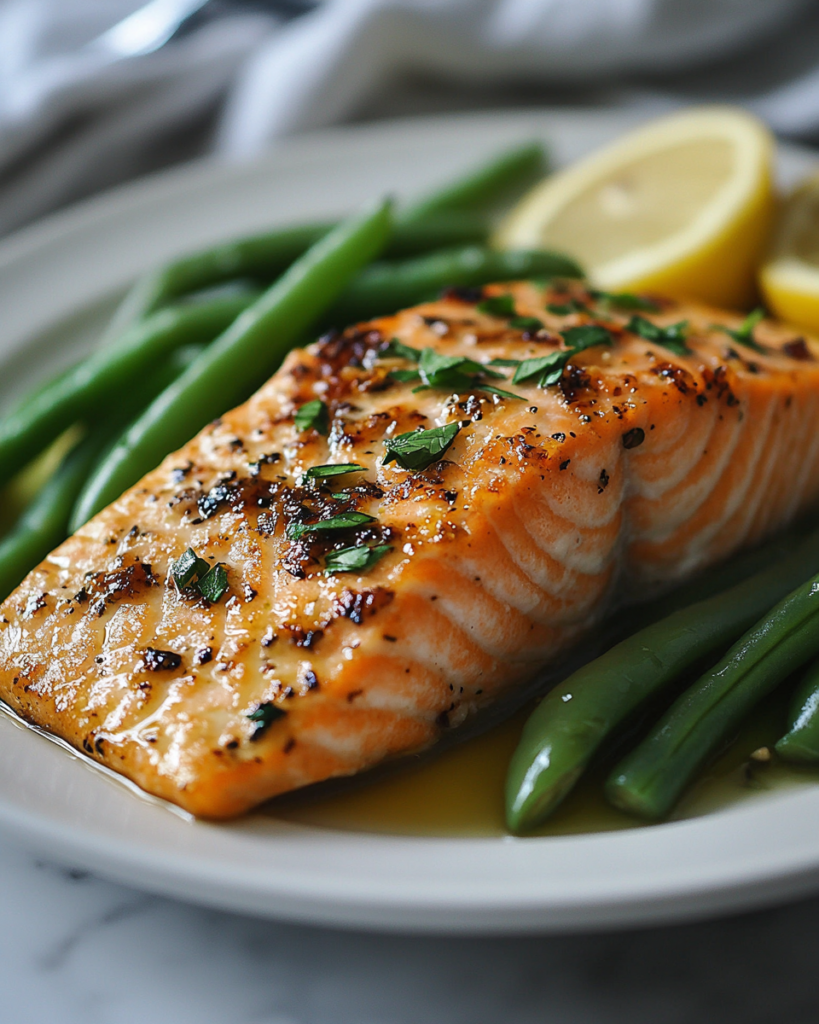
This Easy Diet-Friendly Salmon Dinner brings together tender baked salmon, fresh vegetables, and light seasoning for a balanced evening meal that fits well into a lighter eating routine. The recipe focuses on clean flavors, simple cooking steps, and ingredients that work together without feeling heavy on the stomach.
Salmon naturally provides a rich, buttery texture that pairs well with bright lemon, garlic, and herbs. When baked in the oven, it develops a soft, flaky finish while staying moist inside. This dish works well for busy evenings because it comes together quickly and uses basic pantry staples along with fresh produce.
It is also flexible, allowing you to adjust the vegetables or seasoning based on what is available in your kitchen. The result is a warm, comforting dinner that feels satisfying while still staying light and balanced.
Ingredients Overview

Salmon is the star of this dish, bringing a rich texture and naturally savory taste. Fresh fillets work best, but frozen salmon can also be used once fully thawed. The natural oils in salmon help keep it moist while baking, so only a small amount of added fat is needed.
Olive oil supports the cooking process and adds a gentle richness without overpowering the fish. Lemon juice and zest bring brightness that cuts through the natural fattiness of salmon, giving the dish a clean finish. Garlic adds depth and aroma, making the overall flavor more rounded.
A mix of salt, black pepper, and paprika creates a simple seasoning base. These spices highlight the salmon’s natural taste without masking it. Fresh herbs such as parsley or dill add freshness at the end and bring color to the plate.
For vegetables, options like zucchini, cherry tomatoes, asparagus, or green beans work well. They roast alongside the salmon and absorb some of the seasoning and juices. This makes the entire dish feel connected in flavor while keeping preparation simple.
You can substitute vegetables based on season or preference. Sweet potatoes, broccoli, or bell peppers also work well. The goal is to keep the meal balanced, colorful, and easy to prepare using everyday ingredients.
Ingredients
1 1/2 pounds salmon fillet, skin on or off
2 tablespoons olive oil
1 lemon, sliced and zested
2 tablespoons lemon juice
3 cloves garlic, minced
1 teaspoon salt
1/2 teaspoon black pepper
1 teaspoon paprika
1 tablespoon chopped fresh dill or parsley
1 zucchini, sliced
1 cup cherry tomatoes
1 bunch asparagus, trimmed
1 tablespoon olive oil (for vegetables)
1/2 teaspoon salt (for vegetables)
1/4 teaspoon black pepper (for vegetables)
Step-by-Step Instructions

Start by preheating your oven to 400°F (200°C). Lightly line a baking sheet with parchment paper or a light coating of oil. This helps prevent sticking and makes cleanup easier later.
Place the salmon fillet in the center of the baking sheet. Pat it dry with a paper towel to help the seasoning stick better. Drizzle olive oil over the salmon, then add lemon juice, lemon zest, and minced garlic. Spread everything evenly across the surface.
Sprinkle salt, black pepper, and paprika over the fish. Add lemon slices on top or around the salmon for extra aroma during baking. Let it sit for a few minutes while you prepare the vegetables.
In a bowl, toss zucchini, cherry tomatoes, and asparagus with olive oil, salt, and black pepper. Spread the vegetables around the salmon on the baking sheet in a single layer so they roast evenly.
Place the tray in the oven and bake for about 15 to 20 minutes, depending on the thickness of the salmon. The fish is ready when it flakes easily with a fork and turns opaque in the center. The vegetables should be tender with light browning on the edges.
Avoid overcooking the salmon, as it can become dry. Checking it a few minutes early helps keep the texture moist and soft. If needed, you can broil for 1 to 2 minutes at the end for a slightly golden top.
Once done, remove from the oven and let it rest for a couple of minutes. Sprinkle fresh dill or parsley over the top before serving. Serve warm with the roasted vegetables on the side for a complete plate.
Tips, Variations & Substitutions
For a stronger citrus flavor, add extra lemon slices during baking or a small drizzle of lemon juice right before serving. If you prefer a richer taste, a light brush of honey mixed with lemon juice can be added before cooking.
You can swap vegetables based on what you have available. Broccoli, carrots, or bell peppers roast well and pair nicely with salmon. If you want a lower-carb version, focus on leafy greens or asparagus only.
For seasoning variations, try adding a pinch of chili flakes for mild heat or a small amount of ground cumin for a deeper earthy tone. Fresh herbs can also be changed depending on preference, with dill, parsley, or chives all working well.
If you prefer grilling, the salmon can be cooked on a grill pan or outdoor grill for a slightly smoky flavor. Just adjust cooking time based on thickness and keep a close eye to avoid overcooking.
Serving Ideas & Occasions
This salmon dinner pairs well with light sides such as quinoa, brown rice, or a simple green salad. A yogurt-based sauce or light vinaigrette can also complement the flavors without overpowering the dish.
It works well for weekday dinners when time is limited but a warm, balanced meal is still desired. It also fits nicely into weekend meals when you want something simple yet satisfying.
A glass of sparkling water with lemon or a mild herbal tea pairs nicely with the meal. The light flavors make it suitable for both casual family dinners and meal prep for the week ahead.
Nutritional & Health Notes
Salmon is a natural source of protein and contains beneficial fats that support balanced eating habits. It also provides important nutrients such as vitamin D and omega-3 fatty acids.
The vegetables add fiber, vitamins, and color, helping round out the meal. Using olive oil in moderate amounts keeps the dish light while still adding flavor and texture.
This recipe avoids heavy sauces or frying methods, focusing instead on baking, which helps maintain the natural qualities of the ingredients. The result is a balanced plate that feels satisfying without being overly heavy.
Portion sizes can be adjusted based on personal needs, making it suitable for both lighter meals and more filling dinner portions.
FAQs
Can I use frozen salmon for this recipe?
Yes, frozen salmon works well for this dish as long as it is fully thawed before cooking. The best method is to thaw it in the refrigerator overnight. Once thawed, pat it dry to remove excess moisture. This helps the seasoning stick better and supports even baking. Frozen salmon may release a little more liquid during cooking, but the final texture can still be soft and flaky when baked properly.
What vegetables work best with salmon?
Many vegetables pair well with salmon in this recipe. Zucchini, cherry tomatoes, and asparagus are used here because they cook quickly and absorb flavor well. Broccoli, bell peppers, carrots, and green beans are also good options. The key is to choose vegetables that roast in a similar time range so everything finishes cooking together. Cutting vegetables into similar sizes helps them cook evenly.
How do I know when salmon is fully cooked?
Salmon is done when it turns opaque and flakes easily with a fork. The center should no longer look raw or translucent. Cooking time depends on thickness, but most fillets are ready within 15 to 20 minutes at 400°F (200°C). Checking a few minutes early helps prevent overcooking, which can dry out the fish. A slightly moist center is ideal, as it continues to cook slightly after removal from the oven.
Can I prepare this meal ahead of time?
Yes, you can prepare parts of this meal ahead of time. The vegetables can be chopped and stored in the refrigerator for up to a day. The salmon can also be seasoned a few hours in advance and kept covered in the fridge. When ready to cook, simply place everything on the baking sheet and bake. This makes it convenient for busy evenings.
Can I replace olive oil with another oil?
Yes, other cooking oils such as avocado oil or light vegetable oil can be used. These oils also work well for baking and provide a neutral flavor. Olive oil is commonly used because it pairs naturally with lemon and herbs, but substitutions will not significantly change the outcome of the dish. Use a similar amount for best results.
What can I serve with this salmon dinner?
This dish pairs well with light grains like quinoa, couscous, or brown rice. A simple side salad with greens and a light dressing also works well. If you prefer a lower-carb option, extra roasted vegetables can be added instead of grains. The goal is to keep sides simple so the salmon remains the main focus of the meal.
Can I cook this recipe in foil?
Yes, cooking salmon in foil is a great option. It helps lock in moisture and creates a softer texture. Place the salmon and vegetables on a sheet of foil, fold it into a sealed packet, and bake as directed. The cooking time remains similar, but the salmon may be slightly more tender and juicy due to the trapped steam.