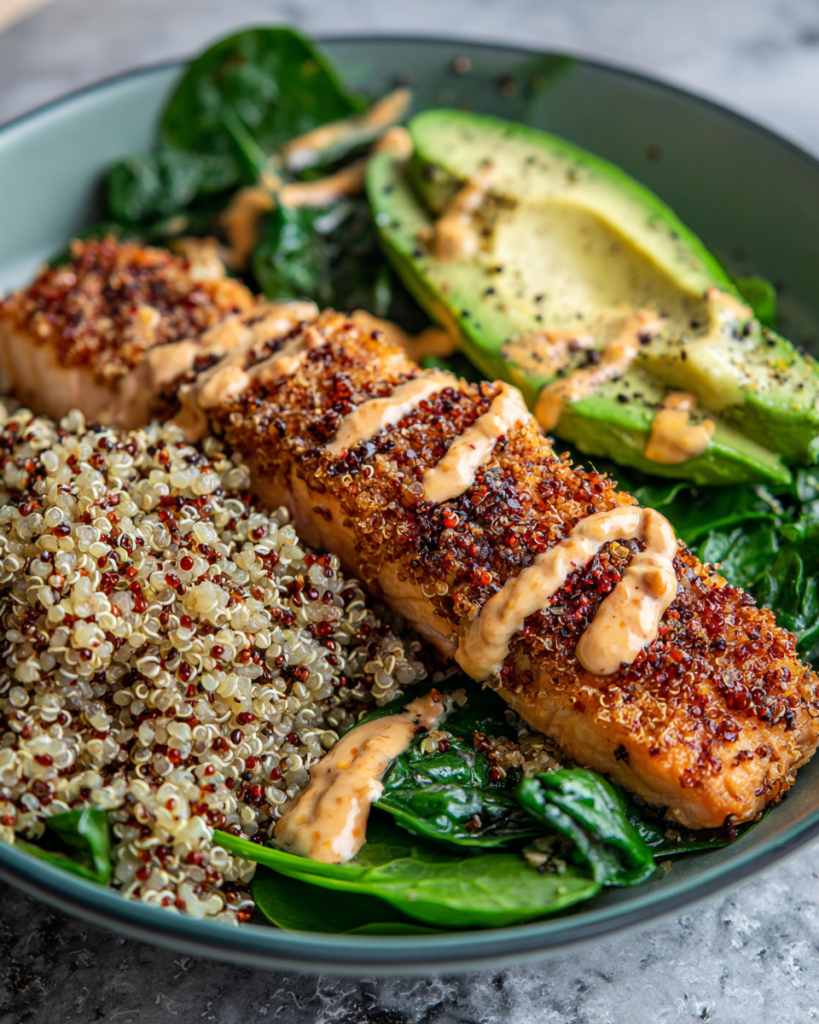
The High Protein Salmon Bowl is a nutrient-packed meal designed to satisfy hunger, fuel your body, and support muscle growth. This dish combines tender, flavorful salmon with wholesome grains, fresh vegetables, and a protein-rich sauce to create a balanced and satisfying bowl. Perfect for lunch, dinner, or post-workout refueling, the High Protein Salmon Bowl is easy to prepare and delivers both flavor and nutrition in every bite.
Rich in omega-3 fatty acids, lean protein, and fiber, this bowl is as good for your body as it is for your taste buds. The key is fresh ingredients and simple cooking techniques that maintain the salmon’s natural flavor while adding layers of texture and seasoning. A variety of grains, vegetables, and dressings can be combined to create a bowl that is colorful, filling, and energizing. The following guide provides all the details to craft the ultimate High Protein Salmon Bowl, along with tips, variations, and serving suggestions.
Ingredients Overview
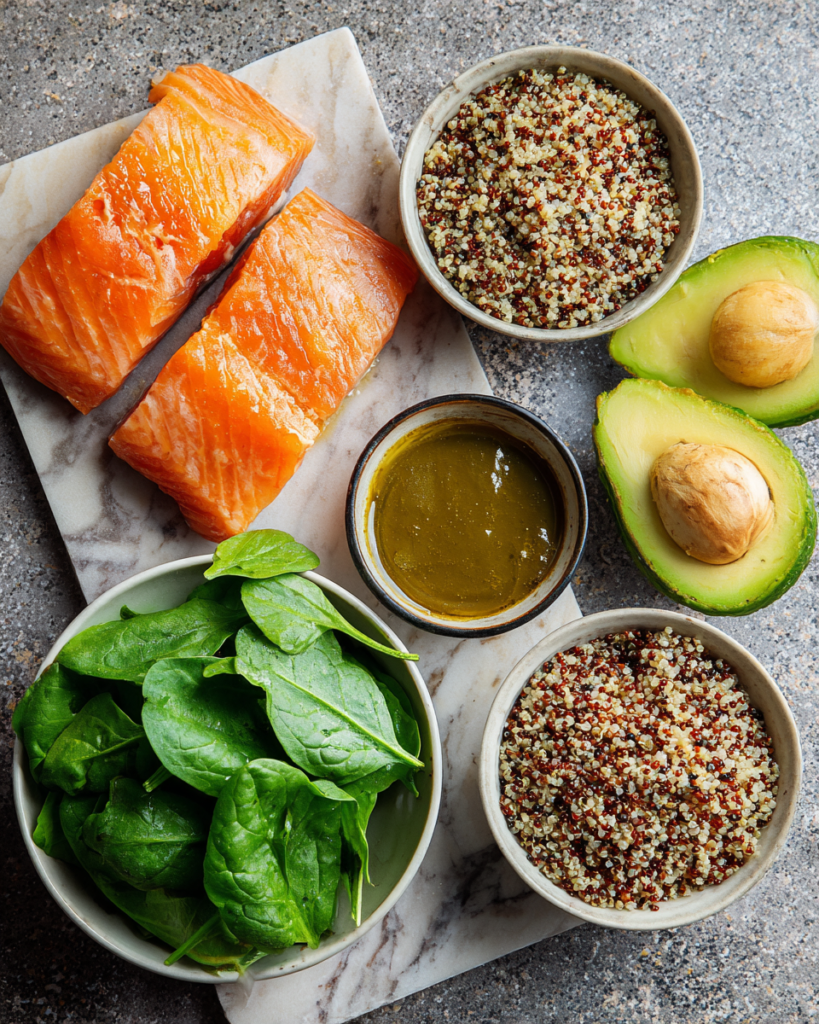
Salmon is the star of this bowl, providing high-quality protein and heart-healthy fats. Wild-caught salmon is ideal for its robust flavor and nutritional profile, but farmed salmon can also be used. Grains like quinoa, brown rice, or farro act as a hearty base, delivering fiber and additional protein.
Fresh vegetables such as spinach, kale, broccoli, cucumbers, and bell peppers provide crunch, vitamins, and minerals. Avocado adds creaminess and healthy fats, while edamame or chickpeas increase the protein content further. For flavor, a sauce made from Greek yogurt, soy sauce, or tahini can tie all the ingredients together, providing moisture and seasoning. Herbs like cilantro or green onions add freshness, while sesame seeds or nuts add crunch and visual appeal.
This combination creates a harmonious mix of flavors and textures, resulting in a High Protein Salmon Bowl that is both nutritious and indulgent. The ingredients are highly versatile, allowing substitutions based on availability, dietary preferences, or flavor profiles.
Ingredients
1 pound salmon fillet, skin removed
1 cup cooked quinoa or brown rice
1 cup steamed broccoli florets
1/2 cup edamame, shelled
1/2 avocado, sliced
1 small carrot, julienned
1/2 cucumber, sliced thin
2 tablespoons olive oil
1 tablespoon soy sauce or tamari
1 teaspoon sesame oil
1 teaspoon lemon juice
1/4 teaspoon black pepper
1/4 teaspoon salt
2 tablespoons chopped green onions
1 tablespoon sesame seeds
Optional Dressing:
2 tablespoons Greek yogurt
1 teaspoon tahini
1 teaspoon lemon juice
1 teaspoon soy sauce
1/2 teaspoon honey
Step-by-Step Instructions

Start by preparing the salmon. Pat the fillet dry and season with salt, black pepper, and a drizzle of olive oil. Heat a skillet over medium-high heat and cook the salmon for 4–5 minutes per side, or until it flakes easily with a fork. Remove from heat and allow it to rest for a few minutes before slicing into bite-sized pieces.
While the salmon cooks, prepare your grains. Cook quinoa or brown rice according to package instructions and set aside. Steam broccoli until tender but still vibrant green. Slice cucumber, julienne carrot, and slice avocado just before assembling to maintain freshness.
To assemble the bowl, place a layer of cooked quinoa or rice in each serving bowl. Arrange salmon pieces on top, then add broccoli, edamame, cucumber, carrot, and avocado around the salmon. Drizzle with olive oil, sesame oil, soy sauce, and lemon juice. Sprinkle green onions and sesame seeds over the bowl for added flavor and texture.
Optional: whisk together Greek yogurt, tahini, lemon juice, soy sauce, and honey to create a creamy dressing. Drizzle over the bowl just before serving. Adjust seasoning to taste, balancing salt, acidity, and richness.
Tips, Variations & Substitutions
For a spicy kick, add sriracha or chili flakes. Swap salmon with grilled chicken, tofu, or shrimp for alternative protein sources. Different grains like farro, bulgur, or barley can be used for variety. Seasonal vegetables like roasted sweet potatoes or asparagus can replace or complement broccoli. Fresh herbs such as cilantro, basil, or parsley enhance the flavor. Nuts like almonds or cashews can be added for extra crunch and nutrition.
Serving Ideas & Occasions
The High Protein Salmon Bowl is perfect for meal prep, lunch, or post-workout recovery. Serve with a side of miso soup or a light salad for a complete meal. It’s ideal for a balanced weekday lunch or an energizing dinner. The bowl can also be packed for work or school lunches, offering a portable, nutrient-dense meal that stays fresh.
Nutritional & Health Notes
This bowl provides high-quality protein from salmon and edamame, healthy fats from avocado and olive oil, and complex carbohydrates from quinoa or brown rice. Omega-3 fatty acids support heart and brain health, while fiber from vegetables and grains aids digestion. With moderate calories and rich nutrients, it’s an excellent option for anyone seeking a filling, balanced, and protein-rich meal. Adjust portion sizes to fit caloric needs or combine with other protein-rich ingredients for an even higher protein content.
FAQs
Can I use frozen salmon?
Yes, frozen salmon works well. Thaw completely before cooking, pat dry, and proceed with seasoning and cooking as usual.
How can I make this bowl vegan?
Replace salmon with baked tofu, tempeh, or chickpeas. Use soy sauce or tahini dressing to maintain flavor without animal products.
Can I prepare this bowl ahead of time?
Yes, assemble grains and vegetables in advance. Cook salmon fresh or store cooked pieces in the fridge for up to 2 days. Add avocado and dressing just before serving.
What grains work best?
Quinoa, brown rice, farro, bulgur, or barley all work well, depending on texture preference. Cook grains ahead to save time.
How do I prevent salmon from overcooking?
Cook over medium-high heat for 4–5 minutes per side. Check for flaking with a fork. Resting the fish allows juices to redistribute for tender results.
Can I freeze the assembled bowl?
It’s best to freeze components separately. Salmon and grains can be frozen, but fresh vegetables and avocado should be added after thawing for optimal texture.
What sauce can I use if I don’t have tahini?
A simple mix of Greek yogurt, soy sauce, lemon juice, and honey works well as a creamy dressing. Olive oil and lemon juice alone also provide a light, flavorful alternative.